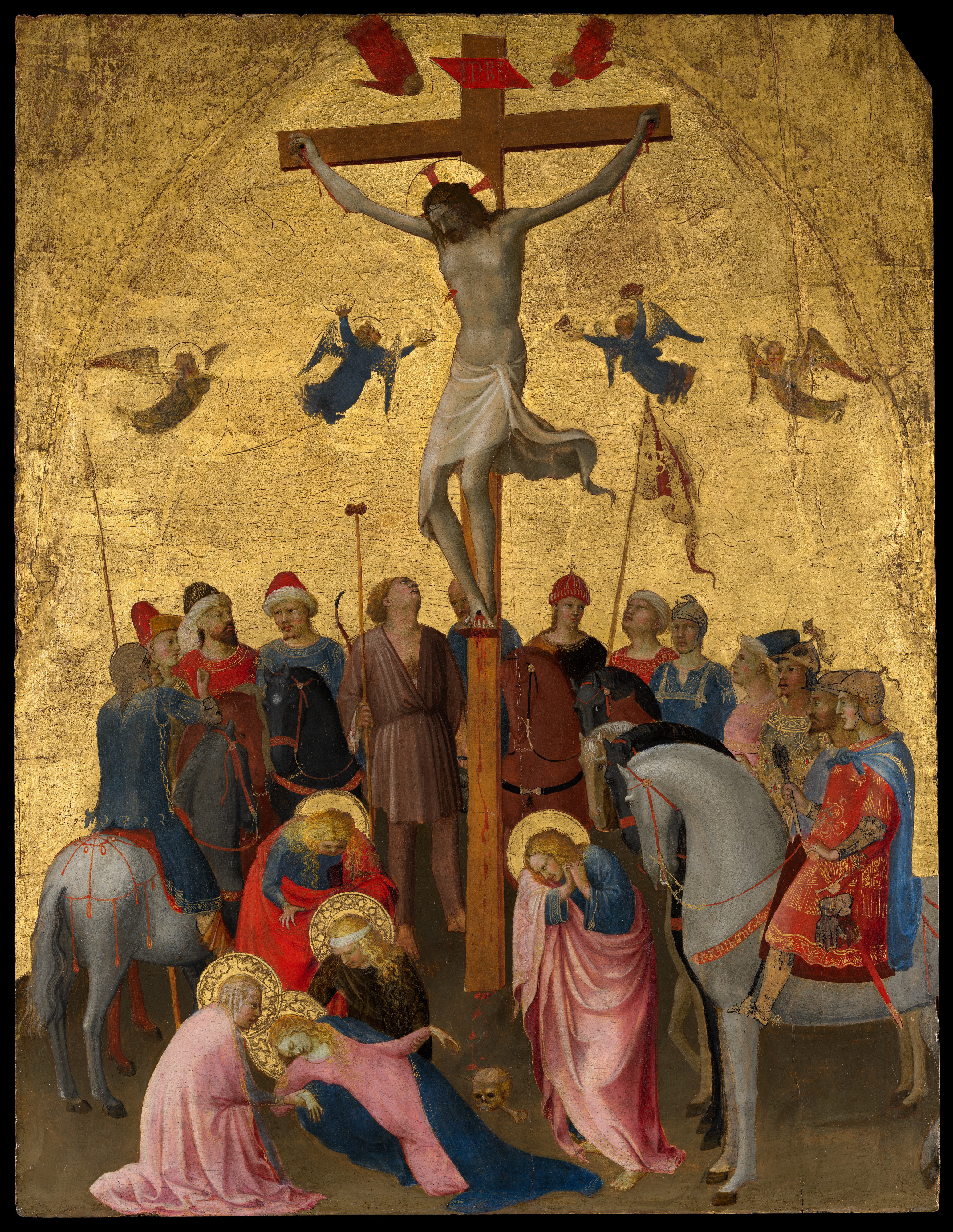
This week, our phrase from the Creed speaks of the Christ who “…suffered under Pontius Pilate, was crucified, died and was buried; he descended into hell;” To understand the historical and theological truth of this confession, we must look at three solid pillars of Scripture: Luke 23, 1 Peter 3, and Matthew 12.
The Historical Reality
When the Creed turns its attention to this climax of Jesus’ life, it anchors our rescue to a specific, deeply flawed human ruler. By naming Pontius Pilate, the Creed gives us an anchor into human history. It pulls our faith out of the realm of “myth” and nails it to a public record. Luke records this exact political transaction that initiated this execution:
“And Pilate summoned the chief priests and the rulers and the people, and said to them, “You brought this man to me as one who incites the people to rebellion, and behold, having examined Him before you, I have found in this man no guilt of what you are accusing Him. No, nor has Herod, for he sent Him back to us; and behold, nothing deserving death has been done by Him. Therefore I will punish Him and release Him.” [Now he was obliged to release to them at the feast one prisoner.] But they cried out all together, saying, “Away with this man, and release for us Barabbas!” (He had been thrown into prison for an insurrection made in the city and for murder.) But again Pilate addressed them, wanting to release Jesus, but they kept on calling out, saying, “Crucify, crucify Him!” And he said to them a third time, “Why, what evil has this man done? I have found in Him no guilt worthy of death; therefore I will punish Him and release Him.” But they were insistent, with loud voices asking that He be crucified. And their voices were prevailing. And Pilate pronounced sentence that their demand be granted. And he released the man they were asking for who had been thrown into prison for insurrection and murder, but he delivered Jesus to their will.” (Luke 23:13-25)
Pilate was a real Roman governor, ruling a real province, during a documented window of time. Naming him serves a important function: it establishes that our faith is regulated by concrete facts, not private sentiments. Jesus did not suffer in a merely poetic or symbolic way; He truly suffered bodily, under a specific political regime. The early Church guarded this message against false teachers who claimed Jesus only appeared to stand trial.
Questions for Reflection:
- Does your mind think of Jesus as a real, flesh-and-blood historical figure who faced a literal government, or do you still look at Him as an abstract character from a religious story?
- When you look at the pressure to fit in with the people around you, do you see how easy it is for a person to sacrifice what is right just to keep the peace?
The True Suffering
The narrative in Luke 23 tracks the raw physicality of Christ’s suffering through a chain of experiences: Suffering, Crucifixion, Death, and finally Burial. Each link in this chain reinforces the reality of Jesus’ humanity. To be crucified was to undergo a shameful, brutal execution in the Roman world. Luke records the progression from His final breath to the physical closing of the grave:
“And it was now about the sixth hour, and darkness fell over the whole land until the ninth hour, because the sun was obscured. And the veil of the sanctuary was torn in two. And Jesus, crying out with a loud voice, said, “Father, into Your hands I commit My spirit.” Having said this, He breathed His last. Now when the centurion saw what had happened, he began praising God, saying, “Certainly this man was righteous.” And all the crowds who came together for this spectacle, when they observed what had happened, were returning, beating their chests. And all His acquaintances and the women who accompanied Him from Galilee were standing at a distance, watching these things. And behold, a man named Joseph, who was a Council member, a good and righteous man (he had not consented to their counsel and action), a man from Arimathea, a city of the Jews, who was waiting for the kingdom of God; this man went to Pilate and asked for the body of Jesus. And he took it down and wrapped it in a linen cloth, and laid Him in a tomb cut into the rock, where no one had ever lain. It was Preparation day, and the Sabbath was about to begin.” (Luke 23:44-54)
This physical burial is the final period at the end of the sentence of His earthly life. It stands as proof that His death was not an illusion. Writing around 110 AD, warning young men against heretics who taught that Christ’s body was a mere phantom, the apostolic father St. Ignatius of Antioch utilized these facts to protect the church:
“Stop your ears, therefore, when any one speaks to you at variance with Jesus Christ, who was descended from David, and was also of Mary; who was truly born, and ate and drank. He was truly persecuted under Pontius Pilate; He was truly crucified, and [truly] died, in the sight of beings in heaven, and on earth, and under the earth.”
Questions for Reflection:
- Why is it vital to recognize that Jesus possessed a real human body that experienced hunger, thirst, and literal physical death, rather than existing as a spiritual phantom?
- When you read about Joseph wrapping a dead body and burying it in a stone tomb, does it make you realize that your own physical life will share that same finality?
Descended into Hell
Following this burial, the Creed confesses a deep mystery: “he descended into hell.” In its original context, the word translated as ‘hell’ refers to the realm of the dead (called Sheol in the Old Testament). It is not the lake of fire or the place of final punishment; it is the baseline of mortal death. In Matthew 12, Christ Himself establishes a timing of this descent:
“Then some of the scribes and Pharisees answered and said to Him, “Teacher, we want to see a sign from You.” But He answered and said to them, “An evil and adulterous generation eagerly seeks for a sign; and yet no sign will be given to it but the sign of Jonah the prophet; for just as Jonah was three days and three nights in the belly of the sea monster, so will the Son of Man be three days and three nights in the heart of the earth.” (Matthew 12:38-40)
During these three days in the heart of the earth, Christ did not remain passive. He actively invaded death’s own territory. St. Peter provides the definitive text regarding Christ’s objective spiritual work within that realm:
“For it is better, if God should will it so, that you suffer for doing good rather than for doing wrong. For Christ also suffered for sins once for all, the righteous for the unrighteous, so that He might bring you to God, having been put to death in the flesh, but made alive in the spirit; in which also He went and made proclamation to the spirits now in prison, who once were disobedient, when the patience of God kept waiting in the days of Noah, during the construction of the ark, in which a few, that is, eight persons, were brought safely through the water.” (1 Peter 3:17-20)
In his Easter sermon, St. John Chrysostom describes how the grave was blindsided by this arrival: “He destroyed Hades when he descended into it. It put it into an uproar even as it tasted of His flesh… Hell took a body, and it discovered God. It took earth and encountered Heaven. It took what it saw and was overcome by what it did not see.”
By entering the grave in a physical body, Christ carried light into the deepest dark. No corner of human existence stands beyond His presence and authority.
Questions for Reflection:
- Since Christ spent three days in the heart of the earth to break the power of death, do your daily habits reflect that you are free, or are you still living in fear of death?
- Chrysostom states that hell was thrown into an uproar because it took a human body but encountered God. Does knowing Christ has absolute dominion over the absolute deepest dark give you confidence when facing the evil and corruption in the world around you?